• Tinkering is widely associated with trial-and-error and brainstorming. Find dictionary definitions of the three techniques, and compare them. Does the definition of tinkering match the definition we have in the course? Also, ask a generative AI tool for the definitions and differences. Which aspects does the answer provided miss?
Definitions from the Cambridge Dictionary:
Tinkering: to make small changes to something, especially in an attempt to repair or improve it
Trial-and-error: a way of achieving an aim or solving a problem by trying a number of different methods and learning from the mistakes that you make
Brainstorming: an activity or business method in which a group of people meet to suggest a lot of new ideas for possible development
All of the definitions mention the specific goal of the techniques. This is interesting because of the focus of the lecture on tinkering not having a specific goal. Tinkering is defined not by solving an issue but changing an already existing thing while trial-and-error and brainstorming are about imagining new things/solutions. Tinkering's definition also does not mention different techniques but small changes, implying that only one domain/method is used. Brainstorming is entirely theoretical in this definition only discussing ideas and not applying them. Something that is not mentioned here in these defenitions is that trial-and-error cen be completly random in what the next step is. Tinkering is more educated guessing.
 Source: Dertien, E. and Mader, A. (2025) ‘Session 1 - getting started’, Mastering Tinkering. Enschede: DesignLab, 11 February.
In the course tinkering is defined as a process with multiple steps as can been seen into the image. The dictionary definition of tinkering skips over the individual steps and just focuses on the action of changing things. In this it skips all the preparation steps and the learning process, both of making mistakes and learning new skills to not make the mistakes again. Again, an important difference is that the dictionary definition specifies a goal which in the lecture the focus was on setting your own goals during the process and discovering new possibilities to works towards.
AI gives the following answers:
1. Tinkering: This refers to the act of experimenting with or adjusting something in a casual or unstructured way. It often involves hands-on manipulation, where individuals explore and make changes to an object or idea, learning through the process.
2. Trial-and-error: This is a problem-solving method where various attempts are made to find a solution, with the understanding that failures are part of the process. It involves testing multiple solutions until one is successful, learning from mistakes along the way.
3. Brainstorming: This is a creative technique aimed at generating a large number of ideas or solutions to a problem. It typically involves group discussion, where participants freely share their thoughts without criticism, encouraging spontaneous and innovative thinking.
Comparison:
Approach: Tinkering and trial-and-error are more hands-on and experimental, while brainstorming is primarily a verbal and collaborative process.
Structure: Tinkering and trial-and-error can be unstructured and spontaneous, whereas brainstorming often follows a more organized format, usually within a group setting.
Outcome: All three techniques aim to generate solutions or ideas, but tinkering and trial-and-error focus on physical manipulation and practical application, while brainstorming emphasizes creativity and idea generation.
The definition provided for tinkering still does not include all the steps mentioned in the image, skipping, for example, the number of errors made. In the comparison the AI mentions in two of the differences that two of the techniques are hands on and the other is theoretical. Brainstorming can also focus on practical application based on the brainstorming technique used
• Can you take a typical I-Tech related project case, list and explain 5 technical hurdles? To which extent do they allow for a 'playful' approach in tackling them? Please give arguments.
An I-Tech related product case I’m currently working on is focused on osteoarthritis in the knee. The goal of the project is to design a prototype that can help with osteoarthritis. During the brainstorming it was decided to focus on prevention more than management as research suggested preventing knee injuries could greatly decrease the change of developing osteoarthritis later in life. To prevent injuries it is recommended to perform some exercises that will help strengthen knee muscles and the joint.
The following technical hurdles are related to the project:
1. Showing the examples of the exercises to athletes in a clear way
2. Tracking the movement of the athlete
3. Preventing the equipment from hindering the athlete in their movement
4. Making the equipment work for all athletes
5. Making the equipment easy to use to motivate the athletes to use the product
I believe the second technical hurdle to be the hardest to approach in a ‘playful’ way. It needs a very technical solution and the readings need to be accurate to make the equipment work. If the readings are not accurate the equipment will not work. The third hurdle to me seems the best for a playful approach. The prototyping could mostly consist of finding ways to connect the equipment and then see if movement is possible. The movement could be playful and just trying multiple body parts and how movement is affected seems to me to be an option for playful development. The first and fifth hurdles are related to user experience which I believe makes it work quite well for a playful approach. By making prototype testing have a more playful atmosphere could give interesting results and allow participants to might enjoy it more and give different feedback. The fourth hurdle is likely a technical list that needs be ticked off making it less fitted for a playful approach in my opinion but getting the prototype and trying it for different situations could offer playful opportunities.
• Where would you go hunting for tinkerspiration? List 5 physical and 5 online resources valuable for an I-Tech specialist. In which did you already find inspiration for a project you did or that got on your bucket list?
All of the following resources are ones I have used before and will likely use again.
Online
1. ACM digital library. The papers in this library can offer inspiration for technologies to use. It can also offer inspiration for projects to work on. Recently I've been looking at a lot of persuasive technology papers for another subject. One I particularly liked as it very clearly explained how the system was build Link
2. Instructibles: A site that offers many tutorials for creative and technical projects. As I also wrote in my about me section I'm currently working on making sugar glass bottles so those are the tutorials I am currently using. The other reason I often look for inspiration is for cosplays. In the summer I might be cosplaying Athena and I found this Spartan helmet tutorial that I might try out. Link
3. YouTube: A video is a great way to learn as you see a process in action. A video I used last year about how to make a leaf brooch that I really liked was this one: Link. Another video that I have saved for years now about crocheting a cat cup cozy and have never gotten to is this one: Link.
4. Etsy: seeing other peoples creative projects can be inspiring for different related projects, as often said: science is build on the shoulders of giants. Art can be similar. I was recently inspired by Axolotl buttons that I found on Etsy:
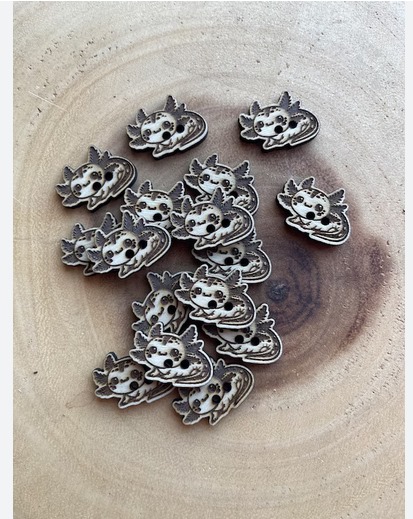
Source: HookYarnsandLoops (no date) 8 - 1" Axolotl Button/Laser Engraved/Unique Button , Etsy. Available at: https://www.etsy.com/listing/1699355335/8-1-axolotl-buttonlaser-engravedunique?gpla=1&gao=1&.
Based on these cute buttons I went to the design lab to make similar ones which turned out well:
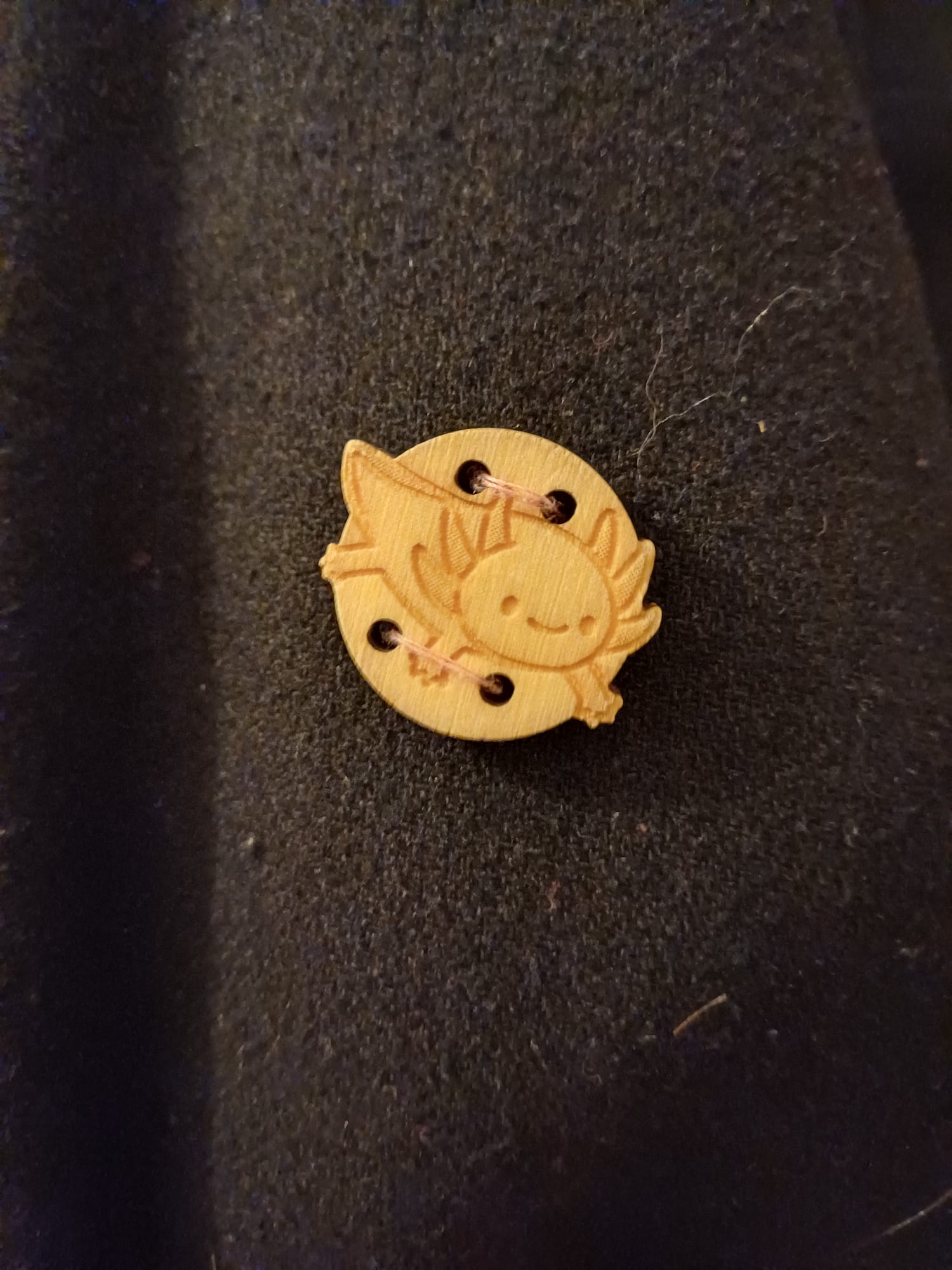
5. Wikipedia: A great place to learn unusual things and to gain a basic understanding of concepts. When I still did my nail art on a daily basis I liked to look at the wikipedia page of the next day to get inspired on what to paint on my nails.
Physical
1. The DesignLab: Seeing the machines and the projects at the DesignLab can show possibilities for methods to use.
2. Your network: discussing projects with friends and other students is a great way to get a new perspective and learn.
3. Magazines: Especially for sewing projects, magazines often includes patterns that can form a basis. My favourites are "Knip Mode" and "Aan de Haak"
4. Museums: Seeing old artifacts and art can sometimes inspire me. It is also a great place to learn. My absolute favourite permanent collection used to be the one of the Rijksmuseum Twenthe. Walking through that collection was a bizar experience. It started with a room where there were these moving larvae robots. At the end there was a room that had many old paintings and was furnished like a standard museum room, but then there was also a puppet of a dying child. It was a great way to distract yourself from life and just experience it. Unfortunately they have recently changed their permanent collection. An item that inspired me directly from a museum was a golden bracelet in the Drenths museum which I still hope to recreate sometime soon.
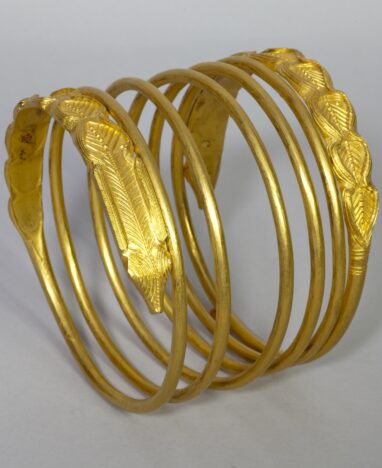
Source: Golden bracelet from Dacia (no date b) Drents Museum. Available at: https://drentsmuseum.nl/en/exhibitions/dacia-empire-of-gold-and-silver.
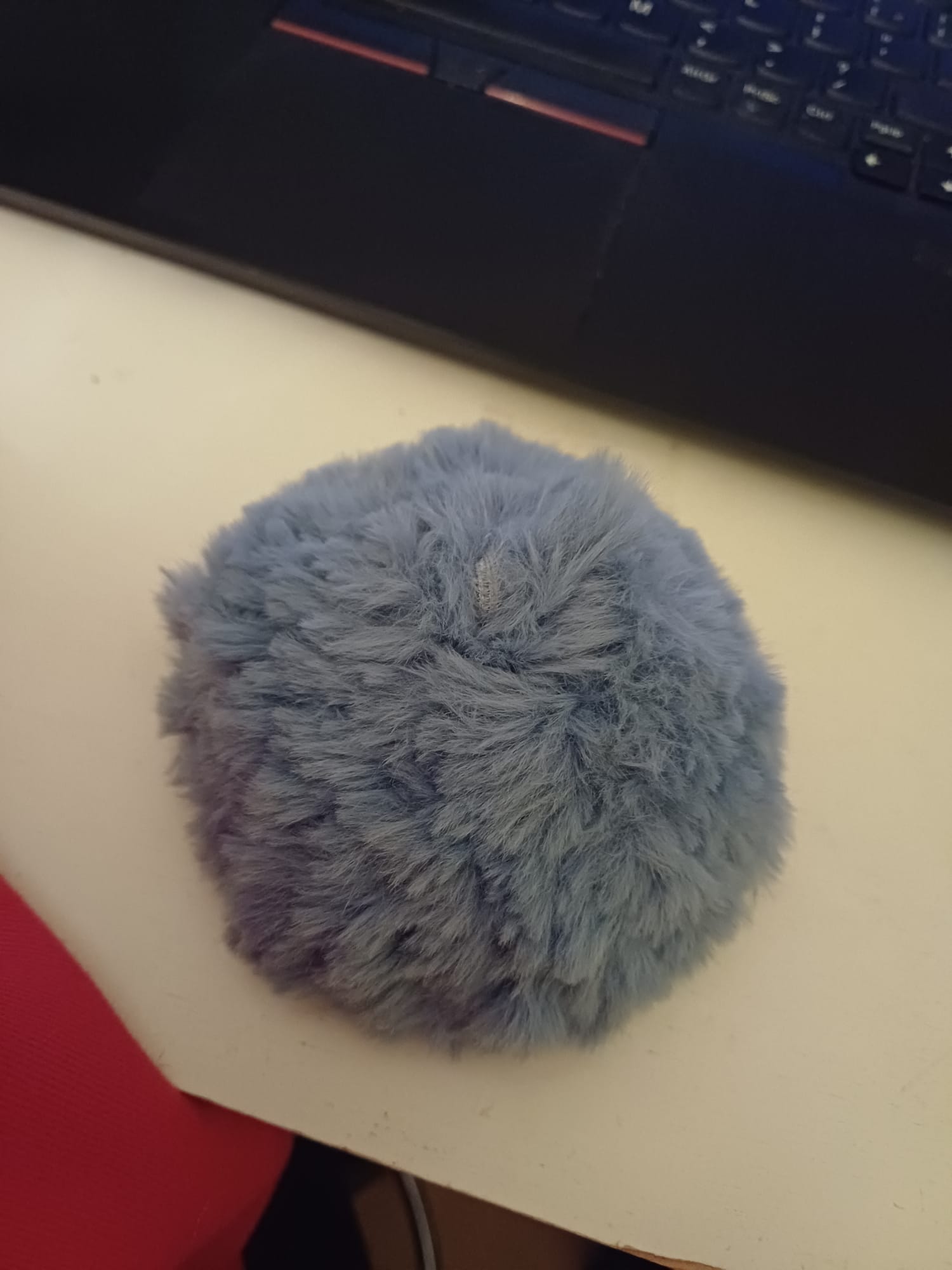
5. My own tinkering space and collections. Sometimes seeing the materials available to me inspires an idea. Especially seeing my wool collection can help with thinking of crochet projects. An example was when I was inspired to make a tribble because I had some fluffy wool left over from when I was making a fluffy plush.
 • List 5 domains, challenges or settings in which you would like to apply tinkering, and explain why. Can you identify some sweet spots, (perhaps beyond the well-known such as STEM education) and can you also define some limitations? Are there 'untinkerable' domains?
An important part of tinkering that has been mentioned in the previous answers is that tinkering is done without a clear goal. In most of the creative hobbies that I enjoy I have a clear goal set out before I begin. This is because most of the time I’m making birthday gifts and thus want to make a specific gift for a person. Therefore, some domains that I would like to tinker in are hobbies I already enjoy doing.
The first is crochet. I tend to follow a pattern and if not then I still have a clear example to follow. I think that if I allow myself to simply try out and se what happens when I try specific stitches I will learn some new things and get more of an insight into pattern designing.
The second is sewing. Even more than crochet sewing is often done with a clear finite amount of material, making me less motivated to try things out. This has led me to not just tinker with fabric which I find unfortunate
A challenge I would like to apply tinkering to is the project of one of my current subjects. In this class we will be working with sensors and completing labs. I hope we can try and tinker with the sensors in the project, but I am worried we might just do the labs. I do believe tinkering with our team could help us with our ideation process
Another challenge I would like to tackle is the lack of shelf space in my room. The walls of the room are all very thin so screwing in planks will not work. I am currently not sure how to fix this issue and tinkering with some possible solutions could help
A last domain I would like tinker within is cooking/baking. Especially when baking I tend to strictly follow a recipe. I also do not tend to bake something again, so I do not have the option of learning from my previous mistakes. I believe tinkering and tweaking recipes can help me gain more insight and give me better recipes to work with.
I do believe cooking and baking are a great domain to tinker within. It can help gain insight in flavours and matching them. A friend of mine used to bake bread by adding quite random ingredients to a basic bread recipe to see what happens. This has given them a great idea for what does and what does not improve bread. A limitation is that there can be some time between trying and results as some recipes include cooling time of a day and baking can also take some time. Another limitation is that if a recipe goes particularly wrong food will be wasted which is an undesired result of tinkering.
I am unsure if an untinkerable domain exists. I do believe some are less fitted for tinkering. An example is medicine, where when testing with life subjects you do not want a large amount of trial-and-error as this can cause people to die. In the lectures it was also discussed that tinkering is a hands-on experience. Based on this observation domains such as coding and writing are also less fitted. This is not to say they can not become hands on experiences, it is simply less likely.